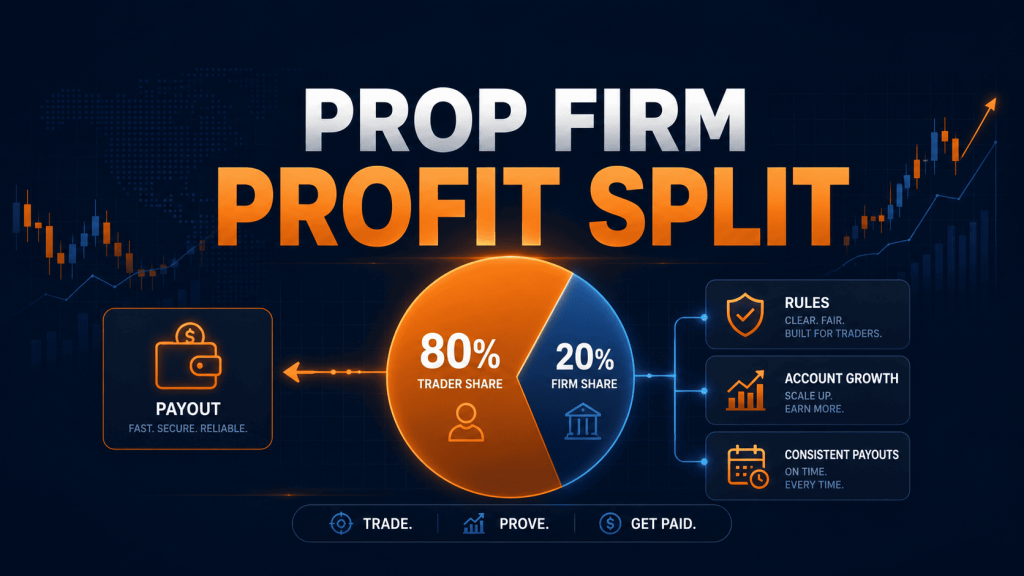



Before choosing a prop firm, check the counterparty, account rules, real loss room, payout path, platform and total cost before comparing headline account size or profit split. A large account has little value when the rules conflict with the strategy, the payout conditions are unclear or the firm cannot explain how account reviews and disputes work.
Use this page as a pre-purchase due-diligence Hub. After defining the rules you need, use the AIFO Best Prop Firm Decision Center to build a shortlist. For AIFO’s current lineup—Instant, 1-Step, 2-Step and Sprint—review the AIFO account models and AIFO trading rules.
Last checked: . This article follows the latest AIFO rule audit. AIFO Free Trial, Challenge and simulated funded accounts use virtual funds in a simulated trading environment. Account-specific rules must not be presented as universal conditions.
What Should You Check Before Choosing a Prop Firm?
Choosing a prop firm means choosing a counterparty, a rule engine, a platform environment and a payout process. A suitable offer should survive every layer of the check.
| Decision layer | What to check | Warning sign | Detailed guide |
|---|---|---|---|
| Firm trust | Company identity, terms, risk disclosure, payout evidence and support behaviour | Strong marketing with weak public documentation | Are prop firms legit? |
| Rule clarity | Targets, Daily Loss, Maximum Loss, trading days, concentration rules and prohibited behaviour | Percentages appear without calculations, rule timing or breach consequences | Prop firm challenge rules |
| Terms and discretion | Refunds, closure, rule changes, payout denial, dispute handling and prohibited strategies | The terms permit broad rejection without a clear rule or calculation | Prop firm terms and conditions |
| Payout path | First request date, KYC, minimum and maximum request, profit split, review and account-specific buffer | The advertised split is clear but withdrawable-profit conditions are hidden | Prop firm payouts |
| Real cost | Challenge fee, retries, spreads, commission, slippage, add-ons and failure probability | The offer is cheap only before trading costs and repeated attempts are included | Prop firm challenge costs |
| Strategy fit | Scalping, swing trading, news, EAs, instruments, holding and execution conditions | The account forces the normal strategy to trade differently | Compare prop firms beyond rankings |
Check Whether the Rules Are Clear Enough to Trade
You should be able to explain every rule in plain language before paying. Unclear rules create avoidable execution and dispute risk.
| Rule check | Question to answer | Trading consequence | Next guide |
|---|---|---|---|
| Daily Loss Limit | Which balance or equity values are used, and when does the trading day reset? | Floating losses can affect the rule before a position closes | Daily loss reset time |
| Maximum Loss Limit | Is it static or trailing, and what value moves the loss floor? | A trailing floor can reduce available room after equity reaches a new high | Daily vs maximum drawdown |
| Trading days | Does the account require minimum trading days, profitable days or another day condition? | The trader may need to remain active after reaching a target | Minimum days vs profitable days |
| Consistency or concentration | Does this account measure a profitable day, winning trade or neither? | Applying the wrong model’s rule can cause unnecessary trading | Consistency rules |
| News and holding | Can positions be opened, closed, modified or held during restricted periods? | A normal setup may become prohibited at a specific stage | News trading rules |
| Automation | Are EAs, bots, trade copiers or account-sharing methods allowed for this model? | Platform capability does not automatically create firm permission | EA and automation rules |
Apply AIFO Rules by Account Model
The following table shows why a model-specific review matters. Use the current AIFO Sprint FAQ for Sprint-specific conditions.
| Account | Target and trading days | Loss structure | Other rule to check |
|---|---|---|---|
| 1-Step | 10% target; at least 2 trading days | 3% Daily Loss; 6% Static Maximum Loss | No Consistency Score requirement |
| 2-Step | Phase 1: 8%; Phase 2: 5%; at least 3 trading days | 5% Daily Loss; 10% Static Maximum Loss | No Consistency Score requirement |
| Instant | No traditional evaluation target before account access | 3% Daily Loss; 5% Trailing Maximum Loss based on high-water-mark equity and capped at initial balance; total floating loss cannot exceed 2% of initial balance | Maximum single-day profit must be less than 20% of payout-period profit |
| Sprint | 3% target in 24 hours; first trade within 48 hours | 2% Static Maximum Loss; total floating loss cannot exceed 1% | First trade selects one instrument and starts the countdown; one open position; largest single-trade profit below 20% |
Accounts purchased before an AIFO rule update may display different parameters on the Dashboard. Follow the terms attached to the purchased account.
Check the Real Loss Room, Not the Account Label
The displayed account size is not the amount available to lose. The usable risk room is the distance between current equity and the nearest applicable breach boundary.
| Test | How to run it | Poor-fit result | Response |
|---|---|---|---|
| Daily-loss cash floor | Convert the Daily Loss percentage into account currency | One normal losing sequence consumes most of the daily room | Reduce risk or select a model with more suitable room |
| Maximum-loss floor | Calculate the exact static or trailing breach level | The account cannot survive the strategy’s ordinary drawdown | Select another model or reduce trade size |
| Trailing high-water-mark test | Simulate an equity high followed by a normal give-back | The pullback reaches the new trailing boundary | Avoid a trailing structure that conflicts with the strategy |
| Floating-loss test | Measure ordinary combined open loss against any separate floating-loss rule | Normal trade management exceeds the Instant 2% or Sprint 1% boundary | Reduce open exposure or choose another model |
| Historical-sequence test | Apply the account rules to a representative sample of past trades | The unchanged strategy would have breached | Do not use the paid account as the first live test |
Use risk per trade in a prop firm challenge before deciding whether the problem is position size, model structure or firm rules.
Check Payout Terms Before the Advertised Profit Split
Payout eligibility is account-specific. A headline split does not explain when profit becomes withdrawable.
| Account | Current payout points | What must not be assumed |
|---|---|---|
| 1-Step and 2-Step | Default 80% profit split, potentially increasing up to 95%; $100 minimum; standard 14-day cycle; no Consistency Score | No mandatory 2% payout buffer applies |
| Instant | $100 minimum; maximum single-day profit below 20% of payout-period profit; mandatory 2% initial-balance profit buffer | A full payout closes the account |
| Sprint | One payout; 90% at closed net profit of at least 3% but below 6%; 95% early payout at closed net profit of at least 6%; request within 30 days | Sprint closes after payout and does not use a universal 2% buffer |
AIFO’s general payout framework sets a $100 minimum and a $10,000 maximum request, with processing usually taking 1–3 business days subject to review. Sprint has its own one-business-day processing statement excluding compliance review. Check the AIFO payout process, first payout rules and payout-denial guide.
Check the Total Fee Path, Refunds and Add-Ons
Measure the full fee path: purchase price, retry or reset cost, spreads, commissions, slippage, swaps, add-ons and the likelihood of paying for another attempt.
- Standard refund: AIFO permits a refund request within 7 days of payment only when no trading has started. This standard policy does not apply to Sprint.
- Add-ons: optional add-ons apply only to eligible 1-Step, 2-Step and Instant accounts. Sprint is excluded.
- Fast Payout: eligible 1-Step and 2-Step accounts may use the add-on to shorten later funded cycles to 24 hours after the first profit split. The first payout still follows the 14-day wait.
- Execution costs: include spread, commission, slippage and swap in the loss-room calculation.
Use the challenge-cost guide, cheapest prop firms comparison and 100K challenge cost guide to compare total cost rather than the first advertised price.
Check Whether Your Strategy Must Change to Obey the Account
| Trading style | Check first | Poor-fit signal | Guide |
|---|---|---|---|
| Scalping | Spread, commission, slippage and prohibited high-frequency behaviour | Execution costs consume too much risk room | Prop firms for scalping |
| Swing trading | Overnight, weekend, swap, gap and Daily Loss reset rules | Ordinary floating loss conflicts with the account boundary | Prop firms for swing trading |
| News trading | Event windows, affected instruments and order actions | The rule does not clearly cover existing positions, stops or pending orders | News trading rules |
| EA trading | Programme eligibility and prohibited automation | The trader assumes platform support equals account permission | EA-friendly prop firms |
| Gold/XAUUSD | Symbol specification, spread, contract value, news execution and loss room | The firm explains forex conditions but not metals exposure | Gold/XAUUSD prop firms |
At AIFO, EAs are permitted only on eligible 1-Step and 2-Step Challenge accounts and their corresponding simulated funded accounts. Do not assume EA permission extends to Instant or Sprint.
Check Reviews as Risk Signals, Not Final Proof
Look for repeated recent patterns concerning payout review, KYC, rule changes, account freezes and support quality. A single complaint is weak evidence; several independent accounts describing the same documented process deserve investigation.
Use how to verify payout proof before relying on a screenshot, leaderboard or affiliate claim. Ask support one precise question before purchase and save the answer with the applicable rule page.
Final Selection Test
- Confirm that all trading uses simulated funds and understand what that means for the service.
- Write down the selected model’s target, loss limits, trading days and concentration conditions.
- Apply those rules to a representative sample of your own trades.
- Calculate the full purchase, execution, retry and add-on cost.
- Verify payout timing, profit split, minimum request, buffer and closure rules by account.
- Confirm that EAs, news trading and holding practices are permitted for the selected model.
- Read the terms, refund policy, risk disclosure and dispute process before payment.
If your ordinary strategy must be distorted to survive the rules, the account is a poor fit even when the firm is legitimate and pays other traders.
Related Due-Diligence Guides
Frequently Asked Questions
Start with rule clarity. You should be able to explain the selected account’s target, Daily Loss Limit, Maximum Loss method, trading days, concentration conditions, prohibited behaviour and payout path before paying.
No. A profit split has value only when the account rules fit your strategy and the payout conditions are clear. Compare the full route to eligible payout rather than the headline percentage alone.
No. Instant, 1-Step, 2-Step and Sprint have different targets, loss methods, concentration conditions and payout requirements. Apply only the current rules for the account being considered.
No. The mandatory 2% initial-balance profit buffer applies to Instant accounts. The latest audited rules do not apply it universally to 1-Step, 2-Step or Sprint.
No. EAs are permitted only on eligible AIFO 1-Step and 2-Step Challenge accounts and their corresponding simulated funded accounts. Do not assume that permission extends to Instant or Sprint.
No under the standard refund policy. A request must be submitted within 7 days of payment and no trading may have started. The standard refund policy does not apply to Sprint.
Read the full rules and terms, calculate real loss room, test your strategy against the selected model, verify the payout path, compare total cost and ask support a precise account-specific question.