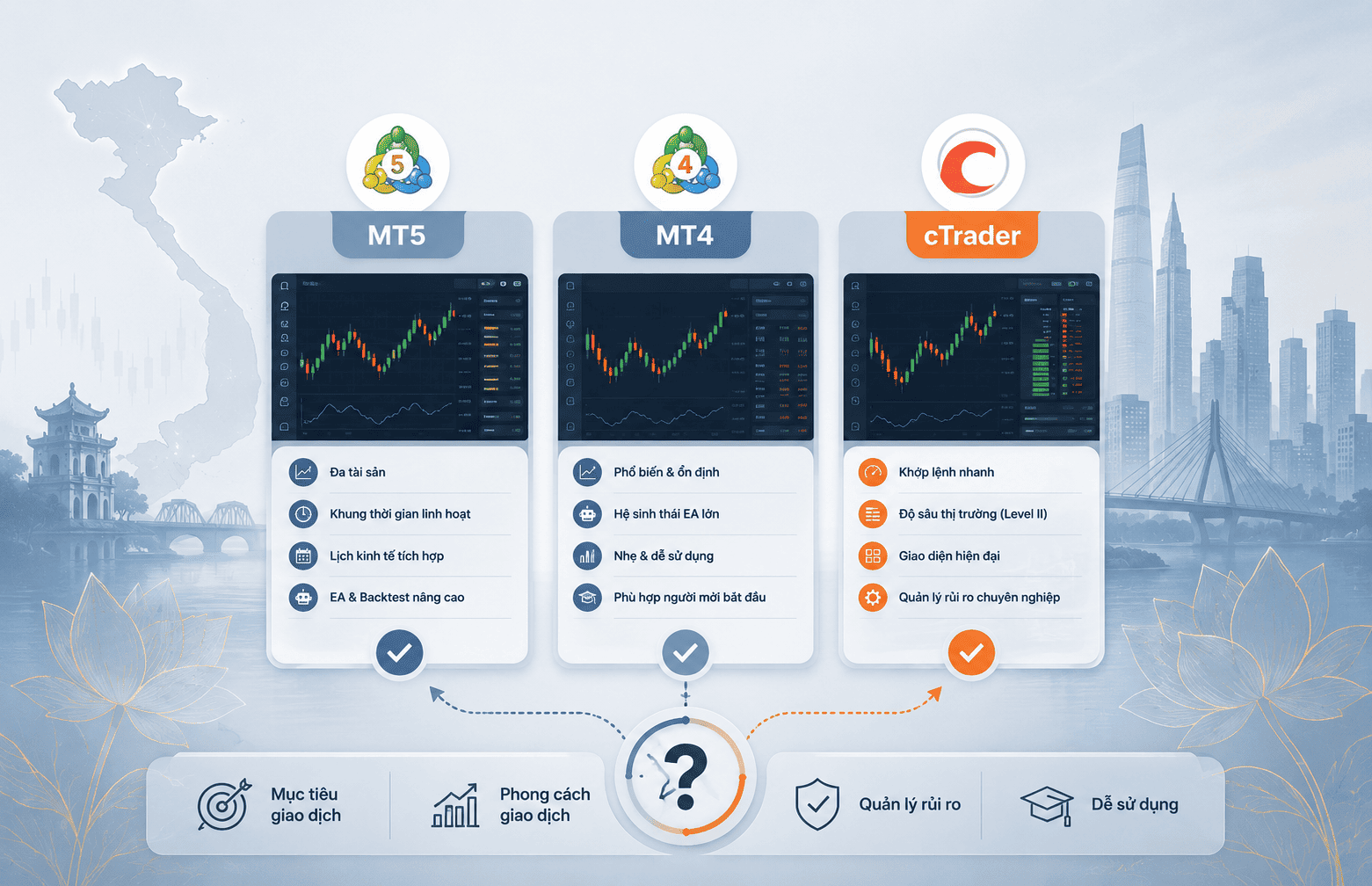



Với trader AIFO, MT5 là đường nền tảng hiện tại, nhưng lựa chọn nền tảng không thay thế account rules. MT5 thường là lựa chọn mặc định tốt nhất cho người mới vì đây là nền tảng AIFO đang hỗ trợ và có workflow MetaTrader hiện đại, quen thuộc với nhiều trader Việt Nam. MT4 vẫn có thể phù hợp nếu trader đã có quy trình MT4 được kiểm chứng và firm hỗ trợ rõ. cTrader phù hợp với người cần depth of market, góc nhìn order-flow nhanh hơn hoặc workflow cBot bằng C#. Nền tảng ghi lại giao dịch; rulebook mới quyết định giao dịch đó có phù hợp tài khoản hay không.
MT5 vs cTrader vs MT4: Câu trả lời trực tiếp cho Prop Trader
Bài viết này là hướng dẫn con về so sánh nền tảng trong AIFO Trading Platform / MT5 Hub. Hãy dùng trang nền tảng chính thức để kiểm tra quyền truy cập MT5 hiện tại của AIFO, rồi dùng hướng dẫn này để hiểu khi nào MT5, MT4 hoặc cTrader hợp lý hơn cho tài khoản prop.
Với trader Việt Nam, nền tảng không chỉ là chuyện “app nào quen hơn”. Nhiều người giao dịch sau giờ làm, chuyển qua lại giữa máy tính, điện thoại và đôi khi cả VPS. Điều đó làm server time, lịch sử lệnh, thao tác đóng/mở lệnh và khả năng chứng minh hành vi giao dịch khi review trở nên rất quan trọng. Đừng chọn platform chỉ vì nhìn mượt hoặc có nhiều indicator.
Ghi chú thị trường Việt Nam: Nếu bạn là trader Việt Nam giao dịch với prop firm quốc tế, hãy kiểm tra điều khoản nền tảng, KYC, payout route, phí chuyển đổi ngoại tệ và rủi ro pháp lý của sản phẩm online trước khi trả phí. Các cảnh báo trong nước về forex trading floors cho thấy trader không nên xem một nền tảng quốc tế là sản phẩm được bảo hộ tự động tại Việt Nam.
| Nền tảng | Phù hợp nhất với ai | Điểm mạnh chính | Rủi ro chính trong prop firm | Ghi chú AIFO |
|---|---|---|---|---|
| MT5 | Phần lớn trader AIFO và đa số người mới cần một nền tảng mặc định hiện đại | Workflow MetaTrader hiện đại, hỗ trợ multi-asset, lịch sử lệnh và mức độ quen thuộc rộng | Dùng quá nhiều tool, indicator hoặc giả định về EA trước khi hiểu rulebook | AIFO hiện hướng trader tới MetaTrader 5 trên Web, iOS, Android và Windows |
| MT4 | Trader đã có quy trình forex MT4 được kiểm chứng và firm vẫn hỗ trợ MT4 rõ ràng | Giao diện forex cổ điển, layout đơn giản và hệ sinh thái MQL4 quen thuộc | Thói quen retail cũ có thể bị mang vào một tài khoản prop nghiêm ngặt hơn | Không phải đường nền tảng hiện tại của AIFO |
| cTrader | Trader thiên về execution cần DOM, order-flow view hoặc cBot bằng C# nếu được phép | Công cụ order-flow sạch hơn, hiển thị depth-of-market và giao diện hiện đại | Tool nhanh có thể khuyến khích click quá nhiều hoặc execution nhạy với rules | Không phải đường nền tảng hiện tại của AIFO |
Nền tảng tốt hơn không phải nền tảng có nhiều nút nhất. Đó là nền tảng giúp bạn kiểm soát order, stop, trade history, server time, account state và các hành động nhạy với rule dễ nhất.
Vì sao MT5 thường là lựa chọn mặc định tốt nhất cho Prop Trader mới
MT5 thường là default tốt nhất vì cho người mới một workflow MetaTrader quen thuộc, đồng thời có hỗ trợ nền tảng hiện đại hơn. Nó không hoàn hảo. Nó chỉ là điểm bắt đầu sạch nhất cho phần lớn môi trường funded account.
Kiểm tra lần cuối vào : trang trading platform công khai của AIFO giới thiệu MetaTrader 5 cho Web, iOS, Android và Windows, đồng thời nói trader có thể dùng MT5 cho forex, indices, commodities và nhiều thị trường khác.
Với trader Việt Nam, MT5 cũng thực tế vì nhiều người quen với hệ MetaTrader khi học forex, xem chart trên điện thoại và đặt lệnh trên desktop. Nhưng thói quen chuyển thiết bị phải được kiểm soát: lệnh đặt trên điện thoại vẫn phải có stop rõ, lịch sử lệnh vẫn phải giải thích được, và giờ server vẫn phải khớp với cách bạn tính daily loss theo giờ Việt Nam.
| Thiết lập MT5 cho người mới | Cần làm gì | Vì sao quan trọng |
|---|---|---|
| Thị trường | Chỉ bắt đầu với một hoặc hai sản phẩm | Ít symbol hơn giúp giảm lỗi sai size và sai phiên giao dịch |
| Order workflow | Dùng một cách entry, một cách đặt stop và một cách exit rõ ràng | Challenge đầu tiên không nên là thử nghiệm nền tảng |
| Hiển thị stop và target | Luôn nhìn thấy stop-loss và take-profit trước khi vào lệnh | Trader phải biết account risk trước khi click |
| Automation | Không dùng EA, script hoặc bot trừ khi firm và account cụ thể cho phép | Nền tảng hỗ trợ kỹ thuật không đồng nghĩa với account-rule permission |
| Lịch sử giao dịch | Kiểm tra trade history sau mỗi phiên | Platform record có thể là evidence trail trong quá trình review |
| Trạng thái tài khoản | Kiểm tra daily loss room trước lệnh tiếp theo | MT5 có thể đặt lệnh, nhưng account state mới quyết định lệnh đó có nên xảy ra hay không |
Đây là nơi quy tắc giao dịch AIFO trở nên quan trọng. MT5 có thể đặt lệnh. Rules quyết định lệnh đó có phù hợp tài khoản hay không.
MT4 vẫn phù hợp với Prop Trader ở đâu?
MT4 vẫn phù hợp với trader muốn workflow forex cổ điển, giao diện đơn giản và hệ tool MQL4 cũ. Nó chưa chết. Nó chỉ không còn là lựa chọn tốt nhất mặc định cho mọi tài khoản prop firm.
Ở Việt Nam, nhiều trader học forex từ MT4 trước, quen chart layout, indicator cũ hoặc file template có sẵn. Điều đó có giá trị nếu quy trình của bạn đã được kiểm chứng. Nhưng “quen tay” không đủ để đưa MT4 vào tài khoản prop, vì prop account thường nghiêm hơn tài khoản retail cá nhân.
| Kiểm tra độ phù hợp của MT4 | Lý do tốt để dùng MT4 | Lý do tệ để dùng MT4 | Cần xác minh gì |
|---|---|---|---|
| Firm support | Prop firm hỗ trợ MT4 rõ ràng cho đúng account type | Trader giả định MT4 có sẵn vì từng dùng ở nơi khác | Platform availability theo account model và funded stage |
| Workflow proof | Trader đã có quy trình order, stop, history và journal trên MT4 được test | Trader chọn MT4 vì nó cũ và đơn giản | Order history, partial closes, trailing stops và session behaviour |
| Tool use | Bất kỳ tool MQL4 nào cũng được firm cho phép rõ ràng | Trader cho rằng thói quen EA trên retail account tự động chuyển sang prop rules | EA, trade manager, copier và script rules |
| Account pressure | Trader hiểu prop rules nghiêm hơn tài khoản retail cá nhân | Trader mang thói quen gồng/gỡ của retail account vào funded account | Daily loss, max loss, consistency và payout review |
Tài khoản retail cá nhân có thể chịu hành vi lộn xộn lâu hơn. Tài khoản prop có daily loss limits, max loss rules, consistency checks, payout review và restricted strategy rules. Nền tảng có thể quen. Account pressure thì không.
cTrader mạnh hơn ở điểm nào?
cTrader mạnh hơn với trader quan tâm đến depth of market, order-flow view sạch hơn và workflow cBot hiện đại. Đây có thể là nền tảng rất tốt cho trader có kỷ luật về execution.
Nhưng với người mới, “nhanh hơn” không tự động là tốt hơn. Một giao diện đặt lệnh nhanh có thể giúp scalper giỏi xử lý tốt hơn, nhưng cũng có thể khiến trader mới click quá tay, vào nhiều lệnh hơn và chạm daily loss nhanh hơn.
| Điểm mạnh của cTrader | Ai được lợi | Nguy hiểm với người mới |
|---|---|---|
| Depth of market | Scalper và order-flow trader hiểu liquidity và execution | Nhìn thấy nhiều depth hơn không có nghĩa trader có nhiều edge hơn |
| Quản lý lệnh nhanh | Trader có kỷ luật, đã kiểm soát được frequency và size | Giao diện nhanh có thể khiến over-clicking dễ hơn |
| Workflow cBot | Developer và trader hiểu automation nếu firm cho phép cBots | Automation có thể vi phạm firm rules dù nền tảng hỗ trợ |
| Execution view hiện đại | Trader cần thống kê execution và order-flow visibility sạch hơn | Nhiều dữ liệu hơn có thể tạo nhiều quyết định hơn mà không có kỷ luật tốt hơn |
Nếu trader không thể dừng sau hai quyết định tệ, giao diện nhanh hơn không giúp được gì. Nó chỉ làm chuỗi sai xảy ra nhanh hơn.
Ma trận quyết định MT5 vs MT4 vs cTrader
Hãy so sánh nền tảng theo hệ quả execution, không phải số lượng tính năng. Nhiều tính năng chỉ hữu ích nếu chúng giảm lỗi ẩn.
| Khu vực quyết định | MT5 | MT4 | cTrader | Kết luận cho người mới |
|---|---|---|---|---|
| Use case tốt nhất | Workflow prop-firm hiện đại mặc định và đường nền tảng hiện tại của AIFO | Workflow forex cổ điển với thói quen MT4 đã test và firm hỗ trợ | Workflow dựa trên DOM hoặc execution-focused nếu được hỗ trợ | Phần lớn người mới nên bắt đầu với MT5 |
| Độ phù hợp với AIFO | Đường nền tảng hiện tại của AIFO | Không phải đường nền tảng hiện tại của AIFO | Không phải đường nền tảng hiện tại của AIFO | Trader AIFO nên học MT5 trước |
| Manual execution | Workflow MetaTrader hiện đại, quen thuộc | Đơn giản và quen với trader forex lâu năm | Giao diện nhanh, có nhiều chi tiết execution hơn | Chọn nền tảng giảm lỗi manual tệ nhất của bạn |
| Automation capability | MT5 có thể hỗ trợ kỹ thuật MQL5 EAs | MT4 có thể hỗ trợ kỹ thuật MQL4 EAs | cTrader có thể hỗ trợ kỹ thuật cBots | Technical support không phải permission; firm rules quyết định |
| Quy tắc automation của AIFO | AIFO hiện yêu cầu manual trading và không cho phép EA hoặc automated systems | Không áp dụng cho đường nền tảng hiện tại của AIFO | Không áp dụng cho đường nền tảng hiện tại của AIFO | Không dùng automation trừ khi official account rules cho phép |
| Audit trail | Trade history, journal và account reports | Đủ rõ nếu firm hỗ trợ reporting MT4 | Trade history, statistics và execution views | Nền tảng tốt nhất là nền tảng bạn có thể document sạch |
| Rủi ro chính với người mới | Quá nhiều tool, signal, indicator và giả định về EA | Mang thói quen cũ từ retail trading sang | Over-clicking vì tool execution nhanh | Quen nền tảng không phải kỷ luật |
| Độ nhạy với rules | EA, news, copy trading, spread và server-time behaviour phải được kiểm tra | EA, trade manager và broker-server rules phải được kiểm tra | cBot, DOM scalping và event execution rules phải được kiểm tra | Account rulebook cao hơn nền tảng |
Lựa chọn nền tảng không thể sửa Prop Firm Rules yếu
Nền tảng không làm payout an toàn hơn. Rules rõ, execution sạch và lịch sử tài khoản có thể bảo vệ được mới làm điều đó.
| Câu hỏi nền tảng nhạy với rules | Vì sao quan trọng | Hướng dẫn chi tiết |
|---|---|---|
| Firm có cho phép nền tảng này với account model này không? | Platform access có thể khác theo account type, khu vực hoặc funded stage | Prop firm MT5 tốt nhất |
| EA, cBot, copy tool hoặc trade manager có được phép không? | Nền tảng có thể hỗ trợ tool kỹ thuật mà firm không cho phép | Prop firm cho phép EA |
| Platform history có đủ chi tiết cho review không? | Payout review có thể xem order timing, duration, lot size, news exposure và automation status | Xác minh bằng chứng payout |
| Trader có thể chứng minh vì sao mỗi lệnh được đặt không? | Audit trail sạch giúp giảm dispute risk khi tài khoản được review | Vì sao payout bị từ chối |
| Thói quen platform có phù hợp với news, drawdown và consistency rules không? | Tool đặt lệnh nhanh có thể tạo rule pressure nhanh hơn trader nghĩ | Quy tắc challenge |
Đó là lý do trader nên hiểu prop trading hoạt động như thế nào trước khi tranh luận về MT5, MT4 hay cTrader. Nền tảng chỉ là một lớp bên trong quá trình funded trading.
Hãy đọc quy tắc payout prop firm với góc nhìn này. Lợi nhuận trên màn hình không giống payout-ready profit.
MT5 EA vs MT4 EA vs cTrader cBot
MT5 có thể hỗ trợ kỹ thuật EA qua MQL5. MT4 có thể hỗ trợ EA qua MQL4. cTrader có thể hỗ trợ cBot. Không tool nào trong số này tự động an toàn trong tài khoản prop firm.
Automation có thể loại bỏ sự do dự. Nó cũng có thể phá rules nhanh hơn trader manual.
| Loại tool | Câu hỏi kỹ thuật | Câu hỏi account-rule | Rủi ro nếu bỏ qua |
|---|---|---|---|
| MT5 EA | MT5 có chạy được EA không? | Firm có cho phép EA execution trên tài khoản này không? | Lợi nhuận có thể bị từ chối dù MT5 chạy tool đúng kỹ thuật |
| MT4 EA | MT4 có chạy được MQL4 tool không? | Firm còn hỗ trợ MT4 và cho phép hành vi EA đó không? | Thói quen automation trên retail cũ có thể vi phạm prop-firm rules |
| cTrader cBot | cTrader có execute cBot không? | Firm có cho phép cBot automation, event execution và short-duration activity không? | Execution nhanh có thể trở thành prohibited behaviour |
| Trade manager | Tool có dời stop, đóng partial hoặc thay đổi risk không? | Tool được xem là hỗ trợ hay automated execution? | Quản lý lệnh hữu ích vẫn có thể tạo review risk |
| Copy tool | Lệnh có thể mirror giữa các tài khoản không? | Firm có cho phép copy trading, account linking hoặc signal use không? | Account independence có thể fail review |
Với AIFO, câu trả lời hiện tại khá đơn giản: Expert Advisors và automated trading systems không được phép, và mọi lệnh phải được trader thực hiện thủ công. Nền tảng cung cấp tool. Firm quyết định tool đó có được chấp nhận hay không.
Chi tiết Execution người mới thường bỏ lỡ: Stop và trạng thái Platform
Người mới thường nghĩ stop lúc nào cũng giống nhau. Chi tiết nền tảng có thể làm giả định đó sai.
| Execution behaviour cần test | Vì sao quan trọng trong prop account | Không nên trade paid account nếu |
|---|---|---|
| Market orders khi thị trường chạy nhanh | Slippage có thể biến planned risk thành daily-loss pressure | Trader chưa bao giờ kiểm tra realistic fill quality |
| Stop-loss và take-profit triggers | History phải thể hiện rõ điều gì đã xảy ra và khi nào | Trader không đọc được trigger behaviour trong platform record |
| Partial closes | Một số chiến lược dựa vào partial exit để quản lý drawdown hoặc consistency | Trader không biết partial xuất hiện thế nào trong account history |
| Trailing stops | Một số trailing action phụ thuộc vào platform, terminal, connection hoặc tool state | Trader giả định trailing behaviour mà chưa test |
| Trade manager actions | Một tool có thể thay đổi risk mà trader không nhận ra kịp | Tool có thể modify orders mà không có xác nhận theo rules |
| Automation logs | Automated actions có thể trở thành review evidence | Firm không cho phép tool rõ ràng |
| Daily equity reporting | Open trades và floating P&L có thể ảnh hưởng daily hoặc maximum loss | Trader không reconcile được platform state với dashboard state |
Hãy đọc khớp lệnh và loại tài khoản trước khi xem platform speed là edge riêng biệt. Execution là thứ tài khoản có thể chứng minh sau giao dịch.
News Trading Rules áp dụng trên cả ba nền tảng
MT5, MT4 và cTrader không tự bảo vệ trader khỏi news rules. Firm quyết định hành động nào quanh sự kiện được phép.
Với trader Việt Nam, các tin như CPI, NFP hoặc FOMC thường rơi vào buổi tối hoặc đêm theo giờ Việt Nam. Đây là thời điểm nhiều người có thời gian trade, nhưng cũng là lúc spread giãn, slippage tăng và rule review dễ trở thành vấn đề hơn. Đừng để “tối nay có tin lớn” biến thành lý do bỏ qua rulebook.
| Hành động quanh news | Ví dụ trên nền tảng | Rủi ro rule |
|---|---|---|
| Manual entry | Trader click buy hoặc sell trong CPI, NFP hoặc FOMC | Firm có thể cấm entry mới trong event window |
| Pending order activation | Stop hoặc limit order được kích hoạt trong event | Firm có thể xem triggered orders là execution trong event window |
| Stop-loss hoặc take-profit trigger | Lệnh có sẵn đóng trong high-impact news | Rule có thể định nghĩa close hoặc modification có bị hạn chế không |
| EA hoặc cBot action | Tool mở, đóng hoặc chỉnh lệnh trong news | Automation cộng news timing có thể tạo hai rủi ro review cùng lúc |
| Holding through event | Position vẫn mở qua thời điểm công bố | Holding có thể được phép trong khi opening hoặc modifying bị hạn chế |
Dùng quy tắc giao dịch news trong prop firm trước khi xây bất kỳ event-based workflow nào. Nền tảng nên được cấu hình để tôn trọng rule, không phải chống lại rule.
Nền tảng nào cho Audit Trail sạch nhất?
Audit trail sạch nhất là audit trail trader thật sự review. MT5, MT4 và cTrader đều có thể ghi lại hoạt động, nhưng trader phải biết đọc record.
| Audit field | Cần kiểm tra sau mỗi phiên | Vì sao quan trọng |
|---|---|---|
| Entry và exit time | Trade có xảy ra trong normal, news hoặc restricted windows không | Timestamp có thể quyết định review outcome |
| Order type | Market, limit, stop, stop-loss, take-profit hoặc tool-driven action | Action type quan trọng khi rules phân biệt open, close và modify |
| Lot hoặc position size | Trade có khớp written risk rules không | Sai size có thể tạo breach hoặc review pressure |
| Stop và target status | Protective orders có tồn tại và trigger như thế nào | Trader phải chứng minh risk được kiểm soát |
| Cost impact | Spread, commission, slippage và swap | Costs ảnh hưởng daily loss room và payout-ready profit |
| Execution source | Manual, EA, cBot, trade manager hoặc copy tool | Tool use có thể bị hạn chế dù lệnh có lợi nhuận |
| Updated account state | Daily loss room, max loss room và next allowed trade size | Mỗi lệnh thay đổi quyền rủi ro của lệnh tiếp theo |
Điều này liên kết trực tiếp với chiến lược quản lý rủi ro cho prop challenges. Mỗi lệnh thay đổi account state. Nền tảng phải làm sự thay đổi đó rõ ràng trước lệnh tiếp theo.
Người mới nên test nền tảng như thế nào trước Paid Challenge?
Người mới nên test nền tảng trong môi trường giống rules trước khi trả phí để chịu áp lực. Mục tiêu không phải học mọi menu. Mục tiêu là loại bỏ platform surprises.
Tài khoản Free Trial của AIFO hữu ích vì cho phép trader test hành vi trước một paid attempt. FAQ Free Trial hiện tại của AIFO nói trial là Two-Step Free Trial, dùng cùng rules với Two-Step Challenge account, không có profit sharing hoặc funded account, và dùng để luyện rules cũng như test strategy.
Với trader Việt Nam, Free Trial cũng là cách tốt để kiểm tra thói quen thực tế: bạn trade trên điện thoại hay desktop, có nhầm giờ server với giờ Việt Nam không, có đọc được lịch sử lệnh không, và có dừng được sau hai quyết định tệ không.
| Bài test trial | Câu hỏi cần trả lời | Chỉ chuyển sang paid khi |
|---|---|---|
| Đặt lệnh | Tôi có thể đặt, chỉnh và đóng lệnh mà không do dự không? | Order ticket cơ bản không còn tạo lỗi |
| Hiển thị stop | Tôi có hiểu stop của mình xuất hiện và trigger thế nào trên nền tảng không? | Platform record khớp với risk plan |
| Account history | Tôi có thể đọc history mà không đoán mò không? | Entry, exit, lot size và order type rõ ràng |
| Daily loss state | Tôi có biết khi nào daily loss room đang thu hẹp không? | Lệnh tiếp theo được size theo account state đã cập nhật |
| Partial close record | Tôi có hiểu partial exits xuất hiện thế nào trong history không? | Journal có thể giải thích account path |
| Behaviour control | Tôi có thể dừng giao dịch sau hai quyết định kém không? | Trader có thể dừng mà không cần nền tảng dừng hộ |
| Tool discipline | Tôi có tránh thêm tool làm thay đổi kế hoạch ban đầu không? | Setup vẫn đơn giản và sạch về rules |
Đó là bài test tốt hơn việc xem tutorial rồi mở paid challenge ngay.
Alpha Insight: Nền tảng tốt nhất là Audit Trail sạch hơn
Lựa chọn nền tảng cho người mới không phải là chart nào đẹp hơn. Nó là audit trail nào sạch hơn.
Tài khoản prop được đánh giá sau giao dịch, không chỉ trong lúc giao dịch. Nền tảng phải giúp trader nhìn thấy toàn bộ đường đi: order, size, stop, result, rule state và payout readiness.
MT5 là default tốt hơn cho trader AIFO vì đây là đường hiện tại của AIFO và là lựa chọn MetaTrader hiện đại rộng. MT4 vẫn phù hợp với trader đã có forex workflow được chứng minh và firm hỗ trợ. cTrader phù hợp với execution specialist biết dùng DOM và automation mà không biến tốc độ thành overtrading.
Thiết lập mạnh nhất cho người mới thường rất nhàm chán: nền tảng rõ, ít tool, written risk rules, order history dễ đọc và không automation trừ khi account framework cho phép rõ ràng.
Đây cũng là lý do vì sao trader fail prop firm challenges thuộc cùng một quyết định nền tảng. Nền tảng không fail challenge. Hành vi lặp lại của trader trên nền tảng đó mới làm điều đó.
Kết luận trực tiếp: MT5, MT4 hay cTrader cho Prop Trader?
Chọn MT5 trước nếu bạn là người mới, đặc biệt khi giao dịch với AIFO. Chọn MT4 chỉ khi prop firm hỗ trợ và workflow MT4 của bạn đã được test. Chọn cTrader nếu edge của bạn cần DOM, quản lý lệnh nhanh hoặc phát triển cBot, và rules của firm cho phép workflow đó.
Đừng chọn nền tảng vì nó nhìn nhanh hơn hoặc quen hơn. Hãy chọn nền tảng khiến risk, history và các hành động nhạy với rule dễ kiểm soát nhất.
Dùng checklist chọn prop firm làm bộ lọc rộng hơn. Platform fit chỉ là một phần của tài khoản. Drawdown, payout, news rules, consistency và conduct rules vẫn quyết định tài khoản có sống sót hay không.
Các hướng dẫn liên quan về nền tảng và execution
- AIFO Trading Platform — quyền truy cập MT5 chính thức cho trader AIFO.
- Prop firm MT5 tốt nhất — so sánh tài khoản và nền tảng riêng cho MT5.
- Khớp lệnh và loại tài khoản — spread, slippage, nền tảng và hành vi tài khoản.
- Prop firm cho phép EA — automation rules và tool risk.
- Checklist challenge trước Day 1 — audit nền tảng và rules trước lệnh paid đầu tiên.
FAQ
Phần lớn người mới nên chọn MT5 trước, đặc biệt khi giao dịch với AIFO. MT4 phù hợp với trader có workflow forex cổ điển đã được chứng minh và firm hỗ trợ rõ. cTrader phù hợp với trader cần depth of market, quản lý lệnh nhanh hoặc workflow cBot, nhưng chỉ khi rules của firm cho phép phong cách đó.
Trang trading platform hiện tại của AIFO hướng trader tới MetaTrader 5 và cung cấp quyền truy cập MT5 qua Web, iOS, Android và Windows. Với trader AIFO, MT5 là nền tảng nên học trước khi so sánh MT4 hoặc cTrader.
Không theo rules công khai hiện tại của AIFO. MT5 có thể hỗ trợ kỹ thuật Expert Advisors, nhưng FAQ EA của AIFO nói Expert Advisors và automated trading systems không được phép, và mọi lệnh phải được trader thực hiện thủ công.
MT4 vẫn có thể hoạt động tốt khi prop firm hỗ trợ và trader đã có workflow MT4 được test. Nó yếu hơn như một lựa chọn mặc định nếu đường nền tảng chính của firm là MT5 hoặc nếu hỗ trợ MT4 không rõ cho đúng account model.
cTrader có thể tốt hơn cho scalper hiểu depth of market và quản lý lệnh nhanh. Người mới nên cẩn thận vì tool execution nhanh cũng có thể khuyến khích overtrading, click nhạy với rules và short-duration behaviour có thể bị firm review.
Chỉ khi prop firm cho phép chúng trong tool rules và conduct rules. MT5 EA, MT4 EA và cTrader cBot vẫn phải tuân thủ drawdown, news, copy trading, risk per trade và payout review rules. Platform capability không giống account permission.
Lựa chọn nền tảng ảnh hưởng evidence trail, nhưng payout review phụ thuộc vào rules của firm. Order history, trade timing, automation status, news actions, copy patterns và risk behaviour nên đủ rõ để hỗ trợ một review sạch.
Có thể dùng cả hai, nhưng paid challenge nên ưu tiên setup ổn định nhất. Điện thoại tiện để kiểm tra tài khoản hoặc quản lý lệnh đơn giản, nhưng entry chính nên được test kỹ trên thiết bị bạn dùng nhiều nhất. Trader Việt Nam cũng nên kiểm tra server time, lịch sử lệnh và cách app hiển thị stop, vì nhầm giờ hoặc thao tác nhanh trên mobile có thể tạo lỗi rule.