


The best 2-step prop firm challenge is the one where both phases fit the trader’s normal risk behaviour. A two-phase account can still fail through the profit targets, Daily Loss Limit, Maximum Loss Limit, minimum trading days, restricted execution or payout rules. Start with the AIFO Best Prop Firm Decision Center for the wider commercial shortlist, then use this page to compare two-phase challenge structures.
A 2-step challenge is not automatically easier or safer than a 1-step challenge. It moves the evaluation across two checkpoints. The order of the targets, the loss limits and the rules after passing determine how the account actually behaves.
Last checked: . For AIFO accounts purchased before 1 September 2026, the challenge parameters displayed on the Dashboard prevail. External firms can change their offers, so verify their current official rules before purchasing.
Best 2-Step Prop Firm Challenges: Quick Rule Filter
| Route to check | Potential fit | Phase pressure | Main rule risk | What to verify |
|---|---|---|---|---|
| AIFO 2-Step | Manual traders and traders using a compliant EA who want two defined evaluation phases | 8% Phase 1 target followed by a 5% Phase 2 target | 5% Daily Loss Limit, 10% Static Maximum Loss Limit and at least 3 trading days | Current Dashboard parameters, EA compliance, payout cycle and account status |
| FTMO 2-Step | Traders comparing a conventional evaluation and verification structure | Verify the current target order on the selected account | Minimum days, news and holding rules, and post-pass review | Exact account type, loss calculations and payout terms |
| FundedNext Stellar 2-Step | Traders who prefer clearly separated evaluation phases | Verify both current targets and any selected account settings | Model-specific payout, KYC, add-ons and funded-stage conditions | The complete selected model rather than brand-wide claims |
| FundingPips 2-Step | Active traders who can manage account-stage rules | Verify current target options and reset mechanics | Inactivity, daily reset and funded-stage risk conditions | Phase rules, news policy and payout timing |
| The5ers High Stakes | Patient traders who can meet the programme’s activity conditions | Verify the current programme version and target structure | Trading-day rules, inactivity and holding conditions | Exact programme version and funded-stage terms |
| FXIFY Two Phase | Experienced traders who understand configurable account settings | Depends on the selected checkout configuration | Add-ons, drawdown selection, platform and payout settings | The final purchased configuration |
| Funded Trading Plus 2-Step | Traders comparing repeatable target pressure across phases | Verify whether current targets are equal or stage-specific | Consistency, symbol-level loss and payout rules | Current official phase and funded-stage conditions |
What Makes a 2-Step Challenge Different?
A 2-step challenge divides the evaluation into Phase 1 and Phase 2. The trader must complete the first objective before progressing to the second while remaining within the applicable risk and trading rules.
| Feature | What it changes | What it does not remove | Common mistake |
|---|---|---|---|
| Two evaluation phases | The trading process must be demonstrated twice | Daily and maximum loss controls | Relaxing risk discipline after Phase 1 |
| Target sequence | The higher target can appear in either phase | The need to size from the loss limits | Comparing only the combined target |
| Minimum trading days | The target may not be the only progression condition | The need for valid account status | Forcing unnecessary trades to finish quickly |
| Post-pass process | Passing both phases moves the trader toward the next account stage | KYC, account review and payout eligibility | Treating Phase 2 completion as an immediate payout |
Read 1-Step vs 2-Step challenges for beginners for the beginner decision, or review the current AIFO account models when comparing available AIFO routes.
Best 2-Step Prop Firm Challenges Reviewed
AIFO 2-Step
Potential fit: Traders who want a defined 8% first phase and 5% second phase, a static loss floor and the option to use a compliant EA.
Current rules: AIFO 2-Step uses an 8% Phase 1 profit target, a 5% Phase 2 profit target, a 5% Daily Loss Limit and a 10% Static Maximum Loss Limit. Traders must complete at least 3 trading days before progressing. No Consistency Score requirement applies.
Why it may fit: The higher objective comes first. Phase 2 then asks the trader to repeat the process at a lower 5% target while preserving the same fixed loss floor.
Main caveat: A static 10% Maximum Loss Limit creates more overall room than some tighter models, but it should not be used as the trader’s normal risk budget. The personal daily stop and risk per trade should remain below the account limits.
EA policy: Compliant Expert Advisors are allowed on 2-Step Challenge accounts and on the corresponding simulated funded accounts after passing. Copy trading, shared EAs and tools designed to circumvent the rules remain prohibited.
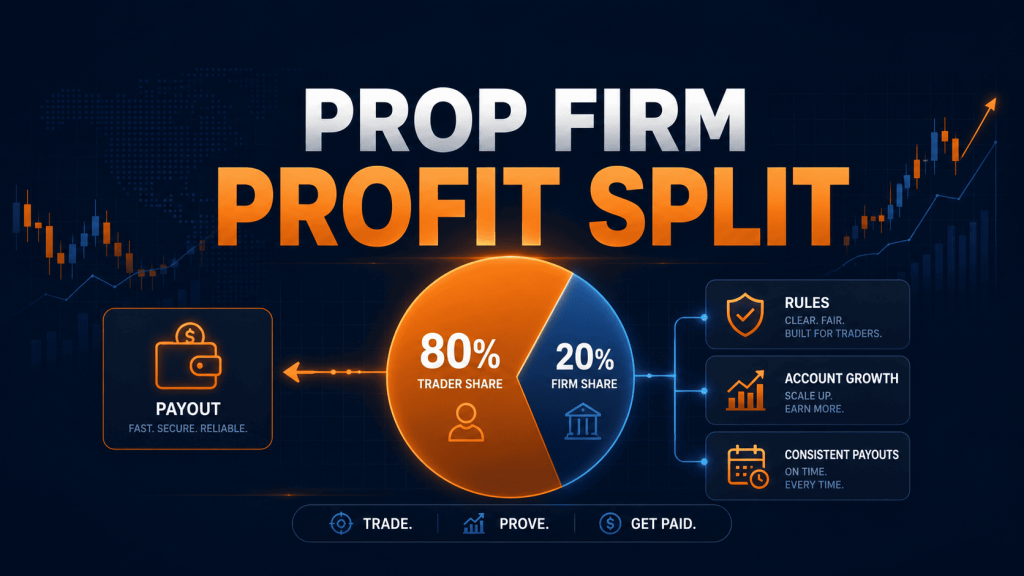
Payout rules: AIFO 2-Step simulated funded accounts start with an 80% profit split and may increase up to 95% through the Scaling Plan. The minimum payout is $100, the standard payout cycle is 14 days, and no mandatory 2% payout buffer applies to 2-Step accounts.
Rule check: Review the AIFO 2-Step Challenge, trading rules, account models and payout process before trading.
FTMO 2-Step
Potential fit: Traders who want a conventional evaluation and verification structure.
Main caveat: The first phase may carry more target pressure. News, holding and account-type rules should be checked on the selected route.
Rule check: Verify both targets, minimum trading days, Daily Loss, Maximum Loss, platform access and the process after passing.
FundedNext Stellar 2-Step
Potential fit: Traders who want a familiar two-phase path with clear separation between stages.
Main caveat: Rules can vary by model. Payout timing, KYC, add-ons, weekend holding and funded-stage conditions should not be assumed across the whole brand.
Rule check: Verify the exact selected target, loss limits, trading days, execution policy and payout schedule.
FundingPips 2-Step
Potential fit: Active traders who understand the account’s target options and stage changes.
Main caveat: Inactivity and reset mechanics can make a late-stage failure more costly than the headline suggests.
Rule check: Verify both phase targets, Daily Loss reset, Maximum Loss, inactivity, news rules and funded-stage risk terms.
The5ers High Stakes
Potential fit: Patient traders who can remain active and follow programme-specific trading-day rules.
Main caveat: Programme versions may use different objectives or activity requirements.
Rule check: Verify the current targets, loss limits, minimum days, inactivity, holding rules and payout terms.
FXIFY Two Phase
Potential fit: Traders who know which configuration, platform and payout settings their strategy needs.
Main caveat: Add-ons can change the real price and account rules. The base offer may not match the final purchased configuration.
Rule check: Verify the selected targets, drawdown type, trading days, payout timing, platform and refund conditions.
Funded Trading Plus 2-Step
Potential fit: Traders who want to compare similar target pressure across two phases.
Main caveat: Consistency or symbol-level loss conditions can matter more than the headline target.
Rule check: Verify current targets, loss formulas, consistency conditions, reward timing and trade restrictions.
Current AIFO 2-Step Rules
AIFO Challenge and funded accounts operate in a simulated trading environment using virtual funds. The current 2-Step rules are:
| AIFO 2-Step field | Current rule | Trading consequence |
|---|---|---|
| Phase 1 target | 8% | The higher profit objective comes first |
| Phase 2 target | 5% | The second stage confirms the process at a lower target |
| Daily Loss Limit | 5% | Daily risk should be planned below the firm limit |
| Maximum Loss Limit | 10% Static | The floor is calculated from the initial account size and does not trail upward |
| Minimum trading days | At least 3 trading days before progressing | Target completion alone may not finish the stage immediately |
| Consistency Score | No requirement | No best-day percentage should be added to the AIFO 2-Step funded rules |
| EA eligibility | Allowed with restrictions on the Challenge and corresponding simulated funded account | The EA must comply with all applicable tool and strategy restrictions |
| Default profit split | 80%, with the potential to increase up to 95% through the Scaling Plan | The actual split follows the applicable funded-account terms |
| Minimum payout | $100 | A request below $100 is not eligible |
| Standard payout cycle | 14 days | Passing the evaluation is separate from reaching a payout date |
| Mandatory 2% payout buffer | Does not apply to 2-Step | Do not import the Instant buffer rule into this account |
2-Step vs 1-Step: Where the Pressure Moves
| Decision point | 1-Step | 2-Step | Trading consequence |
|---|---|---|---|
| Evaluation structure | One phase | Two phases | 2-Step requires the process to be repeated before progression |
| AIFO target | 10% | 8% in Phase 1 and 5% in Phase 2 | The 2-Step target pressure is divided across two account stages |
| AIFO Daily Loss | 3% | 5% | The firm limit differs, but personal risk should remain smaller |
| AIFO Maximum Loss | 6% Static | 10% Static | Both floors remain tied to the initial account size |
| AIFO minimum days | 2 trading days | 3 trading days | 2-Step requires an additional trading day before progression |
| Post-pass path | Moves toward the funded-account process after one phase | Moves toward the funded-account process after two phases | Neither route makes payout immediate upon passing |
Rule Consequences That Decide Passability
| Rule area | What to check | Execution consequence | Detailed guide |
|---|---|---|---|
| Phase target order | Which phase carries the higher target | Changes where performance pressure is strongest | Account models |
| Daily Loss | Percentage, calculation basis, costs and reset time | A volatile session can fail the account before the strategy recovers | Daily loss reset |
| Maximum Loss | Static or trailing calculation | Defines the account’s recovery room after losses | Drawdown rules |
| Minimum trading days | Required days and what counts as a trading day | The trader may still need time after reaching the target | Trading days |
| Consistency | Whether a best-day or profit-distribution rule exists | One large day may affect payout eligibility at firms that use the rule | Consistency rules |
| Execution tools | EA, copier, signal, news and holding rules | A profitable method can still violate the account terms | EA rules |
| Payout | Cycle, minimum, profit split and account-specific buffer | Passing Phase 2 is not the same as payout eligibility | First payout rules |
Alpha Insight
The hidden pressure in a 2-step challenge is the transition between phases. A trader may pass Phase 1 and then change position size because the funded stage feels close.
AIFO places the higher 8% target in Phase 1 and the lower 5% target in Phase 2. The safer response is to preserve the same risk process in both phases rather than treating the second stage as permission to accelerate.
How to Choose a 2-Step Challenge
1. Compare the target order
An 8%/5% route places more performance pressure in Phase 1. Another firm may use a different order or equal targets. Compare the stages individually.
2. Size from the loss floor
Do not build position size from the profit target. Start with the Maximum Loss Limit, then set a smaller Daily Loss stop and risk-per-trade limit.
3. Separate minimum days from profitable days
AIFO currently requires at least 3 trading days. It does not add a 0.5% profitable-day threshold to the current 2-Step rule.
4. Match the execution method
AIFO permits compliant EAs on its 2-Step Challenge and corresponding simulated funded account. Permission to use an EA does not permit copy trading, shared strategies or rule-circumvention tools.
5. Plan the funded-account payout
For AIFO 2-Step, record the $100 minimum payout, standard 14-day cycle and applicable profit split. Do not add the Instant account’s 2% buffer to the 2-Step payout calculation.
6. Complete a pre-trading checklist
Use the prop firm challenge checklist before placing the first order.
Red Flags Before Buying
- The Phase 1 and Phase 2 targets are shown without their order.
- The Daily Loss calculation or reset time is unclear.
- The Maximum Loss method is not identified as static or trailing.
- Minimum trading days are confused with profitable-day requirements.
- A generic consistency rule is applied to every account.
- EA permission is assumed to include copy trading or shared strategies.
- An Instant payout buffer is incorrectly applied to a 2-Step funded account.
- Passing Phase 2 is presented as immediate payout eligibility.
Final AIFO 2-Step Check
- Phase 1 target: 8%.
- Phase 2 target: 5%.
- Daily Loss Limit: 5%.
- Maximum Loss Limit: 10% Static.
- Minimum trading days: 3.
- No Consistency Score requirement.
- Compliant EAs allowed on the Challenge and corresponding simulated funded account.
- Default funded profit split: 80%, potentially increasing to 95% through the Scaling Plan.
- Minimum payout: $100.
- Standard payout cycle: 14 days.
- No mandatory 2% payout buffer.
FAQ
A 2-step prop firm challenge is a two-phase evaluation. The trader must complete Phase 1 and Phase 2 while remaining within the applicable Daily Loss, Maximum Loss, trading-day and execution rules. Passing both phases leads to the next account-stage process, not an immediate payout.
AIFO 2-Step uses an 8% Phase 1 profit target followed by a 5% Phase 2 profit target. The Daily Loss Limit is 5%, and the Maximum Loss Limit is 10% Static, calculated from the initial account size.
Traders must complete at least 3 trading days before progressing. The current rule does not require each day to generate a 0.5% profit.
No. The current AIFO rules state that no Consistency Score requirement applies to 2-Step funded accounts.
Yes. Compliant Expert Advisors are allowed on AIFO 2-Step Challenge accounts and on the corresponding simulated funded accounts after passing. Copy trading, shared EAs and tools designed to circumvent the rules remain prohibited.
AIFO 2-Step simulated funded accounts start with an 80% profit split and may increase up to 95% through the Scaling Plan. The minimum payout is $100, the standard payout cycle is 14 days, and no mandatory 2% payout buffer applies.