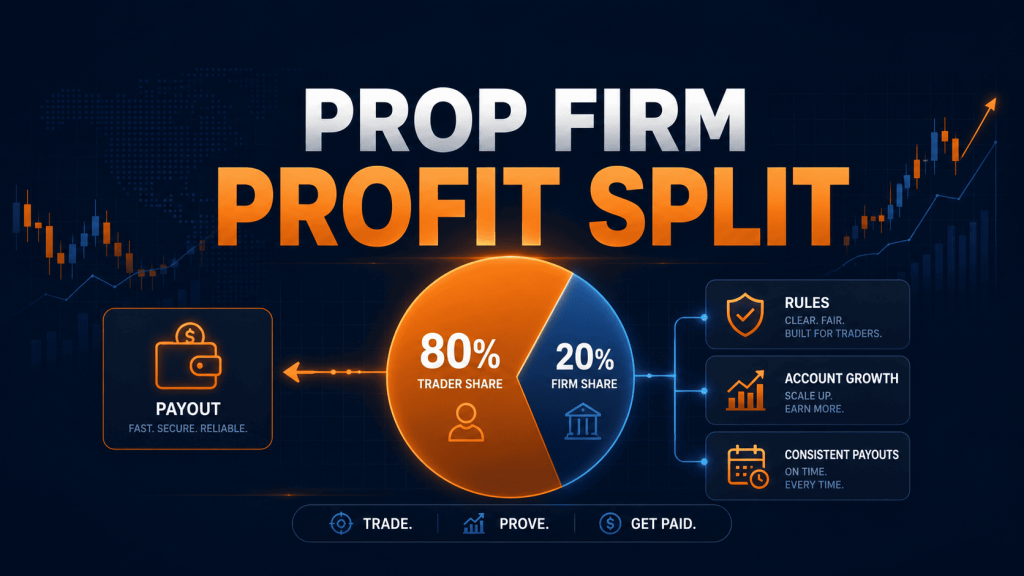



For most complete beginners, the best first step is a free trial or another simulated practice environment, not the fastest paid challenge. At AIFO, every account type uses a simulated trading environment with virtual funds. The Free Trial is the lowest-pressure place to learn the platform and the rules. For a rule-ready beginner choosing a paid evaluation, the 2-Step Challenge is usually the clearest starting point because it divides the target across two phases and uses a 10% Static Maximum Loss Limit.
AIFO currently offers Instant, 1-Step, 2-Step and Sprint routes. The 1-Step Challenge suits traders who can manage a 10% target inside a fixed 6% maximum-loss floor. Instant removes the traditional evaluation but adds trailing drawdown, floating-loss and payout-period consistency rules. Sprint is a 24-hour challenge with a 2% Static Maximum Loss Limit and a 1% total floating-loss limit, so it should not be treated as a beginner practice account.
Beginners in the UK, Canada and Australia should also review the regional checks below before relying on a global shortlist. AIFO rules on this page were last checked on .
A beginner needs a different filter from an experienced prop trader. The first account should test rule discipline, platform habits and risk behaviour. It should not push the trader into oversizing, target chasing or payout confusion.
No prop firm can make trading low-risk, and a paid challenge is not a substitute for learning execution and position sizing. Compare the exact account model, not only the brand or advertised account size.
Best Prop Firms for Beginners: Quick Comparison
The strongest beginner prop firm is the one whose rules the trader can explain before placing the first order. Clear loss limits, understandable account models and a visible payout path matter more than the headline account size.
| Firm or route to research | Why beginners compare it | What to verify | Beginner warning |
|---|---|---|---|
| AIFO | Free Trial plus separate Instant, 1-Step, 2-Step and Sprint rule structures | The selected model’s target, Daily Loss Limit, Maximum Loss Limit, trading days, consistency rule, EA eligibility and payout terms | Do not assume the fastest route is the easiest route or that one AIFO rule applies to every account |
| FTMO | A widely recognised evaluation reference | Current evaluation type, loss calculation, minimum days, fees, platform access and payout conditions | Brand familiarity does not protect a beginner from poor position sizing |
| FundedNext | Multiple account routes | The exact model, stage rules, drawdown, activity rules, payout timing and KYC | Different models from the same firm may not share the same rules |
| The5ers | Structured progression | Current programme, phase targets, trading-day conditions, inactivity and payout rules | Extra day requirements can encourage unnecessary compliance trades |
| Topstep | A futures-focused route | Contract limits, daily and maximum loss, winning-day rules, platform workflow and payouts | Futures contract sizing differs from forex or CFD position sizing |
| FundingPips | Account choices for active traders | Current model, inactivity, trading days, news rules and funded-stage conditions | A low-frequency strategy may not fit activity requirements |
| FXIFY | Configurable account options | Selected phase, drawdown type, add-ons, trading restrictions and payout timing | Checkout flexibility creates risk when the buyer does not understand each setting |
Verification note: AIFO information was checked against the rule baseline supplied for the 3 September 2026 audit. External firms above are research candidates, not a permanent ranking. Verify their current official terms before paying.
What Makes a Prop Firm Beginner-Friendly?
A beginner-friendly prop firm reduces rule confusion. It does not merely reduce the entry fee. The account should make the failure path, progression conditions and payout path visible before the trader pays.
| Beginner filter | What it tests | Common mistake | Better decision | Detailed guide |
|---|---|---|---|---|
| Entry cost | How much pressure the purchase creates | Assuming cheap means safe | Include retry, reset, spread, commission and payout friction | Challenge costs |
| Account size | How much psychological pressure the trader feels | Assuming a larger account is a better first account | Choose a size that allows small risk and clear decisions | 100K account cost |
| Account model | How the trader must prove rule compliance | Choosing the shortest route automatically | Compare the exact targets, loss limits and progression rules | AIFO account models |
| Drawdown | How much error the account can survive | Treating the firm limit as a daily risk allowance | Set a personal stop below the firm limit | Drawdown rules |
| Trading days | Whether reaching the target finishes the stage | Assuming target profit alone completes an evaluation | Check minimum trading days before buying | Trading days explained |
| Consistency | Whether one day or one trade can dominate payout-period profit | Assuming every large winning day helps payout eligibility | Model the exact rule for the selected account | Consistency rules |
| Payout path | How eligible profit becomes a payout | Reading only the advertised profit split | Check minimum, timing, review, KYC and any buffer first | First payout rules |
Is AIFO Good for Beginners?
AIFO can suit beginners who practise first, calculate each rule in account currency and select a model that matches a tested strategy. It may not suit traders who are still learning basic order execution, depend on copied or shared strategies, expect unrestricted automation or choose an account mainly because it looks fast.
All AIFO Free Trial, Challenge and Funded Accounts operate in a simulated trading environment using virtual funds only. A beginner should keep that disclosure separate from the account’s challenge, payout and risk-management terms.
| Beginner question | Current AIFO position | Why it matters | Reference |
|---|---|---|---|
| Can a complete beginner practise first? | The AIFO Free Trial is part of the platform’s simulated, virtual-funds environment. | A trader can learn rule reading and platform habits before deciding whether to buy a challenge. | AIFO Free Trial |
| Are all AIFO drawdown rules the same? | No. The 1-Step and 2-Step challenges use static maximum-loss limits. Instant uses an HWM-based trailing limit, while Sprint uses a tighter static limit. | The loss floor must be calculated for the selected account instead of treating “AIFO drawdown” as one universal rule. | AIFO Trading Rules |
| Do 1-Step and 2-Step funded accounts have a Consistency Score? | No. The current rule baseline states that no Consistency Score requirement applies to 1-Step or 2-Step funded accounts. | A beginner should not copy Instant or Sprint consistency rules onto these account types. | AIFO Trading Rules |
| Can a beginner use an Expert Advisor? | Eligible EAs are allowed only on 1-Step and 2-Step Challenge accounts and the corresponding funded accounts after passing. | EA eligibility is account-specific and still subject to AIFO’s current usage restrictions. | AIFO EA Guidelines |
| Does profit automatically mean payout eligibility? | No. The trader must meet the selected account’s risk, consistency, review and payout conditions. | Dashboard profit and payout-ready profit are not always the same. | AIFO Payout Process |
Which AIFO Account Model Is Best for Beginners?
For a complete beginner, start with the Free Trial. For a rule-ready beginner choosing a paid AIFO evaluation, 2-Step is usually the most forgiving current route. This is an editorial fit judgement based on target structure, drawdown room, time pressure and rule complexity. It is not a promise of passing or profit.
| AIFO route | Current rule structure | Beginner fit | Avoid when |
|---|---|---|---|
| Free Trial | Simulated practice using virtual funds. Confirm the current trial conditions on the official FAQ before starting. | Best first step for complete beginners. It separates learning from paid-challenge pressure. | You expect trial results to guarantee readiness for a paid account. |
| 2-Step Challenge | 8% Phase 1 target, 5% Phase 2 target, 5% Daily Loss Limit, 10% Static Maximum Loss Limit, at least 3 trading days and no Consistency Score requirement. | Strongest general first paid evaluation for rule-ready beginners. The target is staged and the maximum-loss floor remains tied to the initial account size. | You are likely to rush Phase 1, relax after passing it or force trades to complete minimum days. |
| 1-Step Challenge | 10% target, 3% Daily Loss Limit, 6% Static Maximum Loss Limit, at least 2 trading days and no Consistency Score requirement. | For tested beginners who want one evaluation phase. The structure is shorter, but the 10% target must fit inside a fixed 6% loss budget. | You choose it only because one phase sounds easier or you increase risk near a target. |
| Instant | 3% Daily Loss Limit, 5% HWM-based Trailing Maximum Loss Limit capped at the initial balance, floating loss no greater than 2% of the initial balance and maximum single-day profit below 20% of payout-period profit. | Usually not a first paid account. Direct access removes the evaluation but not the risk and payout-period rules. | You still need basic practice, rely on recovery trading or do not understand trailing drawdown and the 2% profit buffer after a payout. |
| Sprint | 24-hour challenge, 3% target, 2% Static Maximum Loss Limit, total floating loss no greater than 1%, one open position at a time and largest single-trade profit below 20% of total profit. | Least suitable current AIFO route for most beginners. It combines a short clock with tight loss controls and only one payout. | You need time to learn, trade several instruments, hold multiple positions or recover from normal strategy variance. |
Beginner Payout Differences That Matter
| Route | Current payout facts relevant to a beginner | Planning implication |
|---|---|---|
| 1-Step and 2-Step funded accounts | Default profit split is 80%, with the potential to rise to 95% through the Scaling Plan. Minimum payout is $100 and the standard cycle is 14 days. | Do not trade as if a higher future split already applies. |
| Instant | Minimum payout is $100. After a payout, at least 2% of the initial balance must remain as a profit buffer to continue trading. A full payout closes the account. | Decide whether account continuity or a full withdrawal is the priority before requesting payment. |
| Sprint | One payout only. Profit of at least 3% but below 6% qualifies for a 90% split; closed net profit of at least 6% can qualify for an early 95% split. The request must be submitted within 30 days after settlement. | Treat it as a one-cycle account, not an ongoing funded path. |
General AIFO payout guidance states a $100 minimum, a $10,000 maximum per request and processing generally within 1–3 business days. Sprint uses its own one-business-day processing statement, excluding extra account checks or compliance review.
How to Verify Other Beginner Prop Firms
Use third-party firm names as a starting list, not as a fixed ranking. Rules, operational status, platforms, prices and country access can change. A beginner should verify the exact account selected at checkout.
| Check | Evidence to find | Reason |
|---|---|---|
| Account identity | Exact model name, phase count, account size and checkout configuration | Rules from a different model do not protect the selected account. |
| Loss calculation | Daily reset time, balance or equity basis, static or trailing maximum loss and breach threshold | A percentage alone does not reveal how the loss floor moves. |
| Completion | Target, minimum days, profitable days, consistency, inactivity and review | Reaching a target may not complete the account stage. |
| Trading restrictions | EA, copy trading, news, weekend holding, scalping, HFT and device or IP rules | A profitable method can still violate the account terms. |
| Payout | First request date, split, minimum, maximum, KYC, open-position rules and processing time | An advertised split does not show when profit becomes eligible. |
| Cost | Fee, tax, currency conversion, reset, retry, spread, commission and payout charges | The headline fee may not be the total cost of the first attempt. |
For a broader market checklist, compare the candidates on the best prop firms overview and then verify every shortlisted model on its official rule pages.
Best Prop Firms for Beginners in the UK, Canada and Australia
The practical beginner choice can differ by region. Country eligibility, KYC documents, payment access, payout channels, server-time conversion and local legal or tax responsibilities can change whether a global account is usable.
As of the audit baseline dated 3 September 2026, the UK, Canada and Australia are not named in AIFO’s restricted-country list. This is not a permanent availability guarantee. Confirm live checkout, identity verification, payment access and local requirements before purchasing.
| Region | Beginner checks | Regional guide | AIFO checks |
|---|---|---|---|
| United Kingdom | GBP payment access, accepted documents, simulated-account disclosure, platform support and the accuracy of any regulatory statement | UK prop trading guide | Country eligibility and KYC process |
| Canada | Provincial context, accepted identity and address documents, payment routes, payout records and personal tax records | Canada prop trading guide | Country eligibility and payment methods |
| Australia | AEST or AEDT conversion, daily reset timing, payment routes, accepted documents and local responsibilities | Australia prop trading guide | Country eligibility and MT5 server time |
Regional eligibility and payment options can change. Absence from a restricted-country list does not replace live checkout, KYC, sanctions screening or the trader’s responsibility to comply with applicable local requirements.
Alpha Insight: The First Account Trains the Trader
The first prop firm account does more than test a beginner. It reinforces habits. A cheap account can encourage disposable-risk thinking. A large account can encourage oversizing. A fast account can encourage target chasing. The best beginner route is the one that lets the trader preserve a tested process while understanding every rule.
Red Flags Beginners Should Avoid
| Red flag | Why it hurts beginners | Question to ask | Better next step |
|---|---|---|---|
| Huge account size at low cost | It can turn a learning decision into oversized thinking. | Can I risk small and still follow my plan? | Start with practice or a smaller first account. |
| Rules spread across several pages | The trader may miss the condition that closes the account. | Can I explain daily loss, maximum loss and payout rules in one minute? | Use the challenge rules guide. |
| High split with unclear payout terms | The percentage means little if profit is not payout-ready. | What must be true before the first payout request? | Read the first payout guide. |
| Fast route with tight loss limits | The trader may chase a target with too little recovery room. | How many normal losing trades can this account survive? | Test the last 20 trades against the rules. |
| Unclear restricted trading rules | A profitable method can still be invalid. | Are EAs, copy trading, news and weekend holding permitted on this exact model? | Ask support and save the written answer before buying. |
Use what to check before choosing a prop firm before paying. The useful question is not only “can I afford the fee?” It is also “can this account support my tested process without pushing me to trade differently?”
Should Complete Beginners Buy a Prop Firm Challenge?
Complete beginners should not buy a paid challenge before they understand order execution, position sizing, stop placement and the difference between a personal risk limit and a firm’s breach limit.
| Stage | Beginner action | Move on only when | Guide or page |
|---|---|---|---|
| Practice | Trade a simple strategy in demo or a free trial. | You can follow a personal daily stop for several weeks. | AIFO Free Trial |
| Rule test | Apply daily loss, maximum loss, trading-day and consistency rules. | You can explain every breach condition before trading. | Day 1 checklist |
| Risk test | Write a risk-per-trade and personal daily-stop plan. | You can take two planned losses without revenge trading. | Risk per trade |
| Small first account | Choose a route that does not create emotional pressure. | You can risk small without trying to recover the fee quickly. | Lower-cost prop firms |
| Payout readiness | Trade for rule-compliant, payout-eligible profit. | You understand the split, timing, review, KYC, minimum and buffer rules. | Prop firm payouts |
Read is prop trading suitable for complete beginners if basic order types, lot sizing, market sessions or stop placement are still unfamiliar.
Final Beginner Checklist Before Paying
| Before paying | Write down | Block the purchase when |
|---|---|---|
| Account model | Free Trial, Instant, 1-Step, 2-Step, Sprint or a third-party model | The model was chosen only because it sounds fast or cheap. |
| Total cost | Entry fee, tax, currency conversion, reset, retry, spread and commission | You know only the headline fee. |
| Loss room | Daily and maximum loss in account currency, including the exact calculation method | You know only the percentages. |
| 20-trade test | Whether the last 20 trades would survive the selected rules | The historical sequence breaches without any change to the plan. |
| Restricted behaviour | EA, copy trading, news, holding, HFT, scalping and account-access rules | Your strategy depends on behaviour that may be prohibited. |
| Payout path | First payout date, split, minimum, maximum, KYC, consistency and buffer | You know only the profit split. |
| Day 1 plan | Risk per trade, personal daily stop, maximum trades and process-error stop | Your plan is to decide after trading starts. |
If the account would make you trade larger, trade more often, hold through an unsuitable event or chase a payout, select a different route. Use a prop firm challenge checklist before the first order.
Related Beginner Guides
FAQ
A complete beginner should start with a free trial or another simulated practice environment before buying a challenge. At AIFO, the Free Trial is the lowest-pressure starting point. A paid account should come only after the trader can execute orders, size positions and explain every breach rule.
AIFO can suit beginners who practise first, calculate the rules in account currency and choose a model that matches a tested strategy. All AIFO Free Trial, Challenge and Funded Accounts operate in a simulated trading environment using virtual funds only. Its paid routes may not suit traders who are still learning basic execution or depend on copied or shared strategies.
The 2-Step Challenge is usually the clearest first paid AIFO evaluation for a rule-ready beginner. It uses an 8% Phase 1 target, a 5% Phase 2 target, a 5% Daily Loss Limit, a 10% Static Maximum Loss Limit and at least 3 trading days. No Consistency Score requirement applies.
It can suit a tested beginner who wants one evaluation phase and can manage a 10% target within a 3% Daily Loss Limit and a 6% Static Maximum Loss Limit. At least 2 trading days are required, and no Consistency Score requirement applies.
Usually no. Instant has a 3% Daily Loss Limit, a 5% HWM-based Trailing Maximum Loss Limit, a 2% floating-loss limit and a single-day profit concentration rule. Sprint is a 24-hour challenge with a 3% target, a 2% Static Maximum Loss Limit, a 1% total floating-loss limit, one open position at a time and only one payout.
Eligible Expert Advisors are allowed only on AIFO 1-Step and 2-Step Challenge accounts and the corresponding funded accounts after passing. Permission is account-specific and remains subject to AIFO’s current EA usage restrictions.
Check the exact account model, total cost, target, Daily Loss Limit, Maximum Loss Limit and calculation method, minimum trading days, consistency conditions, restricted trading, KYC and payout rules. Test the complete rule set against at least the last 20 trades before paying.